Santa Monica Rent Control Board November 3, 2026
Sue stands
firm.
Santa Monica’s rent control law is under attack from landlords, from developers, and from politicians who count new units and ignore the people already living here. Sue Himmelrich is running to defend it for the more than 27,000 households who depend on it. People, not profits.
No money from developers, landlords, or corporations. Not in 2014, not in 2018, not now.

27,000
Santa Monica households living in rent-controlled homes, protected by a charter the voters wrote in 1979.
8 years
On the Santa Monica City Council, two of them as Mayor. Sue was elected in 2014 with the second-highest vote count in the field.
$100M+
Generated for renter services, homelessness prevention, and affordable housing by two ballot measures Sue proposed and funded, which also sent $60M+ to public schools.
$0
From developers, landlords, and corporations. Sue funds her own campaigns so that nobody else owns her vote.

Why she is running
A proven champion for Santa Monica renters
The City Charter makes the Rent Control Board the guardian of renters’ rights in Santa Monica, and it answers to the more than 27,000 households living in rent-controlled homes. That guardianship is being tested from every direction: by landlords, by developers, and by self-described pro-housing politicians who value the quantity of new housing over the security of the people already living in our apartment stock.
Sue is running to keep the Board in the hands of the most qualified and most committed rent-control and renters’ rights advocates in the city. She has spent forty years reading, writing, and arguing the law, and the last fourteen applying it to Santa Monica’s housing fights, from Village Trailer Park to Measure GS.
She is not looking for a next office. She is looking to do this job, carefully and by the Charter, for four years.
The platform
What Sue will do on the Board
Six commitments. Where the Charter gives the Board discretion, Sue will use every bit of it to keep renters in their homes and to protect them from abuse of their rights. Where the Charter does not reach, she will use the seat as a platform to push the City Council and Sacramento to act.

-
Protect the housing we already have
Our older apartments are the last housing in Santa Monica a middle-income household can afford. New market-rate building belongs on the commercial boulevards and downtown, where the city’s housing plans always put it.
-
Hold the line on displacement
No renter should be forced out of their home unless public safety leaves no other choice. Sue has held that line for fourteen years and will not trade it for anyone’s development deal.
-
Raise the bar for eviction
Sue will fight for the Board’s proposed charter amendments: a minimum threshold of rent owed before a landlord can evict, and the right for renters to invite others into their homes without triggering eviction.
-
Make enforcement answer to renters
Code enforcement has to answer to the renters who report the problem, not outlast them. Sue will also push for a harder look at how the Board values a reduction in amenities and what it really costs a household.
-
Defend the money that keeps people housed
In three years Measure GS has produced $50 million for homelessness prevention and affordable housing and $30 million for public schools. Sue wrote it, funded it, and will fight AB-736, which guts that money and replaces none of it.
-
Expand income support and legal help
Sue will push to extend the Preserve Our Diversity program past seniors to families and people with disabilities. And because 95% of unrepresented renters lose their cases, she wants a lawyer standing next to every one of them.
The record
Forty years of receipts
Harvard College, then Columbia Law. Forty years practicing law: litigation partner at two national firms, mediator for the Los Angeles Superior Court and the California Court of Appeal, Judge Pro Tem, volunteer eviction lawyer, and now Special Counsel at the Western Center on Law & Poverty.
-
1992
Makes Santa Monica home
Thirty-four years and counting. Sue grew up on the East Coast and came to Los Angeles to practice law, making partner at Brobeck, Phleger & Harrison in 1991 as one of about thirty women among a hundred and seventy-five partners.
-
2006 – 2014
Nights at the eviction clinic
As a volunteer attorney for the Legal Aid Foundation of Los Angeles, Sue ran morning clinics preparing restraining orders for domestic violence survivors and evening clinics advising renters facing eviction. She served as a Judge Pro Tem in Los Angeles Superior Court and as a mediator for the California Court of Appeal.
-
2012 – 2014
Village Trailer Park
When the City moved to displace more than thirty residents of Village Trailer Park on inadequate terms, Sue fought it and joined SMRR. That work got her appointed to the Planning Commission on the first round, where she held developers, officials, and staff to the Affordable Housing Production Program and Prop R.
-
2014 – 2022
City Council, and two years as Mayor
Elected in 2014 with the second-highest vote count in the field, and again in 2018. Sue moved to lower the annual cap on rent increases, stop evictions of teachers and students during the school year, bar landlords from refusing Section 8 renters, and limit the Airbnb and corporate housing that strips units off the market. She also made lobbyists register, created an audit subcommittee with residents on it, and put Council correspondence in public view. She served two years as Mayor and stepped down at the end of her second term, exactly as she promised in 2014.
-
2016 & 2022
Measures GS-GSH and GS
Sue was an official proponent of both, and paid for the campaigns herself. Together they have generated more than $100 million for renter services, homelessness prevention, and affordable housing, plus $60 million and counting for Santa Monica’s public schools. In 2022 she voted to put Measure RC on the ballot, cutting the cap on annual rent increases from 6% to 3%.
-
Today
Still in court for renters
As Special Counsel at the Western Center on Law & Poverty since 2012, Sue brings impact litigation on safe and affordable housing, health care, and public benefits for low-income Californians. She is asking for four years on the Rent Control Board, and she is pledging to serve all four.

Straight answers
The questions renters ask
What is the Rent Control Board for?
In 1979 Santa Monica voters wrote rent control into the City Charter to stop a rental market that, left alone, would raise rents fast enough to burden or evict the people living here. Those conditions never went away.
The Board’s powers are bounded by the Charter and by state law, but inside those bounds they decide a great deal: whether landlords are getting a fair return, how far rents may rise or must fall, which amenities are covered by the rent and what it is worth when one disappears, and on what grounds a renter can be evicted or a unit pulled off the market.
What keeps renters from staying in their homes?
Affordability, first. According to the most recent HUD data, two in ten Santa Monica renter households are lower income and pay more than half their income for rent and utilities. Another one in ten pay between 30% and 50%.
Second, not knowing your rights or not being able to enforce them. The Board and its staff have to teach, and the City’s expanded funding for Legal Aid Foundation attorneys has to reach the low- and moderate-income renters who need someone in their corner.
Third, redevelopment of rent-controlled buildings. The Board has real power here, and it is a decisive voice in the fight to keep what we have.
Preserve existing units, or clear them for new buildings?
Preserve them. Sue’s position on displacement does not bend: no renter should lose their home unless public safety makes it unavoidable. There is ample room for new market-rate building along the boulevards and downtown, which is exactly where every housing plan this city has written put it.
The Palisades and Eaton fires reminded everyone what relocation does to people. An eviction lands the same way. And our older rent-controlled buildings are the only housing left in Santa Monica that a middle-income household can afford, so we protect them as far as humanly possible.
Where do you stand on SB 79?
Sue opposed SB 79 while it still carried no protection for rent-controlled housing, and she was proud of the current Rent Control Board for opposing it unless amended. The version that passed leaves rent-controlled properties of only two units unprotected, which is not good enough.
Bills like the original SB 79 and AB 1740 endanger rent control because, in the rush to approve market-rate housing, Sacramento stops looking at who already lives in the buildings it is upzoning.
Should anyone be evicted over a small rent debt?
No. Sue backs the Los Angeles County standard, which raises the threshold to two months of HUD fair market rent. A landlord can recover anything smaller through emergency rental assistance or small claims court. Nobody needs to lose a home over it.
Can a renter add family to their household?
Yes, and Sue will fight for the charter amendment that guarantees it. Life regularly makes it necessary to take a family member in. Homeowners can do that without asking permission, and renters should be able to as well, subject to reasonable limits.
What can the Board do about Costa-Hawkins and the Ellis Act?
The Board follows the law. It can also insist that the conditions those state laws require are genuinely met before it signs off on a removal permit, and Sue will read every one of those applications closely. Barrington Plaza showed what happens when nobody does.
Sue wants Costa-Hawkins and the Ellis Act changed. Until that happens, the practical fight is in Sacramento: money for ongoing and emergency rent assistance, a right to counsel, an exemption from mandated upzoning for rent-controlled buildings, and public land for permanently affordable housing.
How will you decide a case between a landlord and a renter?
By the law, and on the record. Sue has sat as a neutral for most of her career: Judge Pro Tem in Los Angeles Superior Court, mediator for the California Court of Appeal and the Superior Court, settlement officer for the federal district court, Planning Commissioner, and Council member.
Renters have to trust that the Board reaches its decisions honestly, and landlords have to know the process is real. That integrity is what holds the whole fabric of rent control together.
Who funds this campaign?
Sue does. She funded her winning Council campaigns in 2014 and 2018 herself and intends to do the same here. Donations are welcome, but she takes nothing from corporations, and nothing from real estate developers or landlords. That includes her own brothers, who develop property in Maryland and Florida and are commercial landlords.
It is a simple arrangement: no contributor has a claim on how she votes, because the people who would want one are not on the list.
The rest of the ballot
How Sue is voting
Rent control does not survive on its own. Here is how Sue is voting on the rest of the 2026 ballot, and why each one lands on renters.
-
Yes
The SMMUSD parcel tax. At $495 a year per parcel it is a reasonable way to hold school funding steady while federal and state support shrinks. The burden on rent-controlled renters stays limited, because the Board caps what landlords may pass through and the pass-through is spread across every unit on the property.
-
Yes
The California Billionaire Tax Act. Wealth inequality is eroding the quality of life for everyone but the wealthiest. It is why Sue wrote and funded Measure GS, and it is why she supports this.
-
Mixed
Housing at the airport. Sue wants below-market-rate housing on the airport land, though not in the form this measure proposes, and she wants a Great Park. The two are not mutually exclusive, and building on land the city already owns saves the roughly $25 million an acre it costs to buy any here.
-
No
Requiring a two-thirds vote for local taxes. A small minority of voters should not hold veto power over the majority. Without local revenue measures, cities cannot serve the residents who need them most.
-
No
Voter ID requirements. The measure would suppress legitimate participation and impose delays on the voters who do turn out.
-
No
AB-736. It would gut the funding stream Measure GS created and replace none of it, wiping out the City’s expansion of emergency renter assistance, free legal counsel, income assistance, and affordable housing. Sacramento should not overturn what Santa Monica voters chose for themselves.
Endorsements
Who stands with Sue
-

Santa Monica Democratic Club
-
Santa Monicans for Renters’ Rights
-

California Democratic Party Renters Council
-

Los Angeles County Democratic Party
-
Westside Young Democrats
-

Heart of LA Democratic Club
- Congressman Ted Lieu
- Mayor Caroline Torosis
- School Board President Alicia Mignano
- DNC member Susie Shannon
- BOE member Tony Vazquez
On the ground
Around Santa Monica



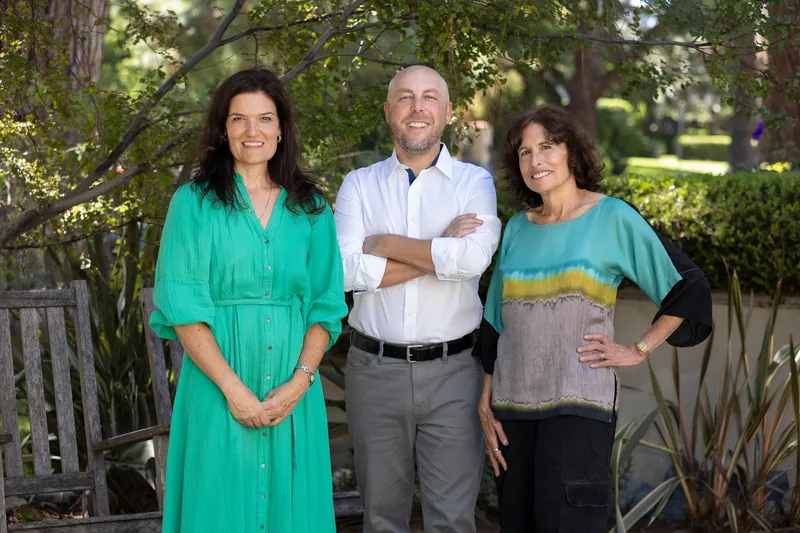






Photographs do not imply endorsement.
Get involved
Rent control only holds if people hold it
Endorse Sue, volunteer, take a lawn sign, or ask her a question. Messages go straight to Sue, and she answers them herself.
- sue.himmelrich@gmail.com
- facebook.com/sue.l.himmelrich
Send Sue a message
You'll be taken to your email client to send the message after you fill out the form.